First big city I’ve visited in Argentina and wasn’t disappointed! It has a population of about 620 000 inhabitants, which makes it the second most populated city in the northwest of the country. Nicknamed Salta la Linda (Salta the beautiful) because we believe the name comes from Quechua meaning “beautiful”, it has become a major tourist destination due to its old, colonial architecture, tourism friendliness, excellent weather, amazing empanadas and natural scenery of the valleys around.
Salta was founded in 1582 by the Spanish who intended the settlement to be an outpost between Lima and Buenos Aires. The city was split in 2 from the main square, Plaza 9 de Julio, and Calle del Comercio: North and South for higher and lower classes. Therefore, the Church is on the Northern side of the Plaza. The Spanish having organized the city as a grid, all the streets from North to South change names at the main square and all numbers start at the the Plaza and go from East to West.
To discover the city, I recommend the Free Walking Tour, it was about 2 hours and really well explained.
Museo de Arqueologia de Alta Montaña (MAAM)
Tue-Sun 11am-7:30pm
130 pesos entrance fee
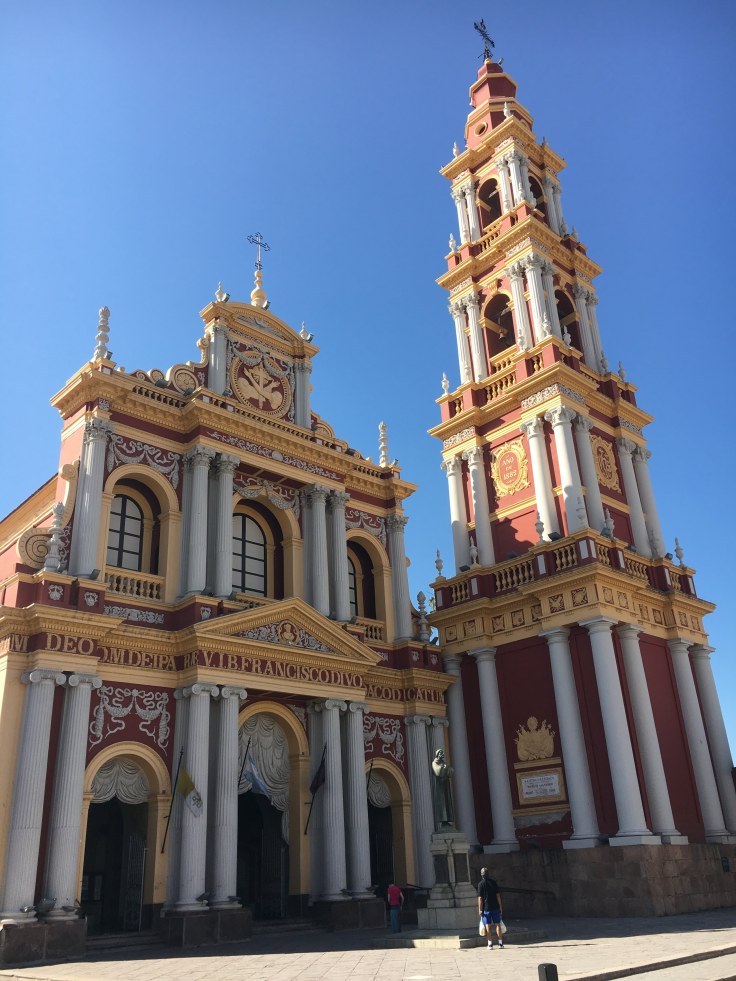
Iglesia San Francisco
San Francisco Church is one of the oldest buildings (rebuilt last in 1800). Two Italian architects were in charge of creating the church which is why it has an Italian style (roman columns, baroque decorations, etc.) and created the bell tower next to the church, and not on the roof, so the tower would be an independant tower, campanile, which is now the tallest in South America.
Corner Calle Caseros and Calle Córdoba
Mon-Sun 8am-1pm, 2pm-6:30pm
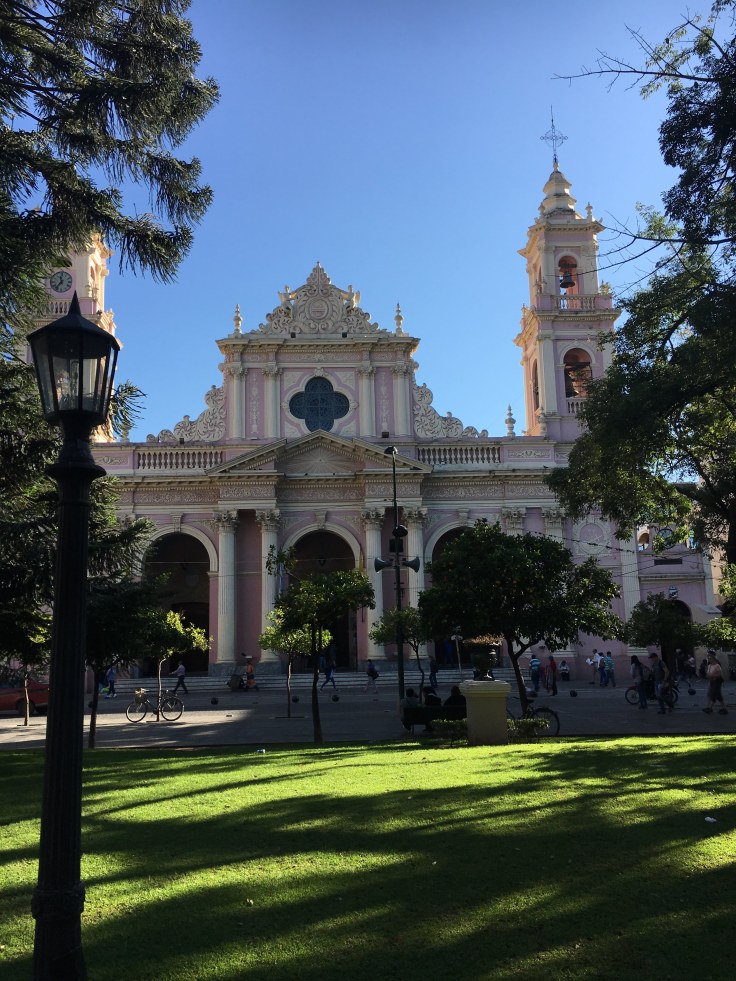
Catedral Basilica de Salta
The pink cathedral harbors the ashes of General Martín Miguel de Güemes, a salteño (person from Salta) and independence hero. It looks spectacular when it’s illuminated at night.
España 590
Open outside of mass hours: Mon-Fri 6:30am-12:15pm, 4:30-8:15pm, Sat 7:30am-12:15pm, 4:30-8:15pm, Sun 7:30am-1pm, 5-9pm Sun
Convento San Bernardo
This 16th-century convent, which actually welcomes 19 nuns, is only open to the Carmelite nuns. The church can be visited before Mass (from 7am to 8:30am weekdays and Sunday mornings, and 7pm to 8pm Saturday evenings). It used to be a hospital but when the city expanded, they had to build a bigger one. The main door is considered as art as it was handmade by natives for an aristocrate family Lacamara that donated it when they sent their daughter to the convent. The totems tell a story: the 3 seeds and its journey to becoming a plant and then a fruit.
Calle Caseros
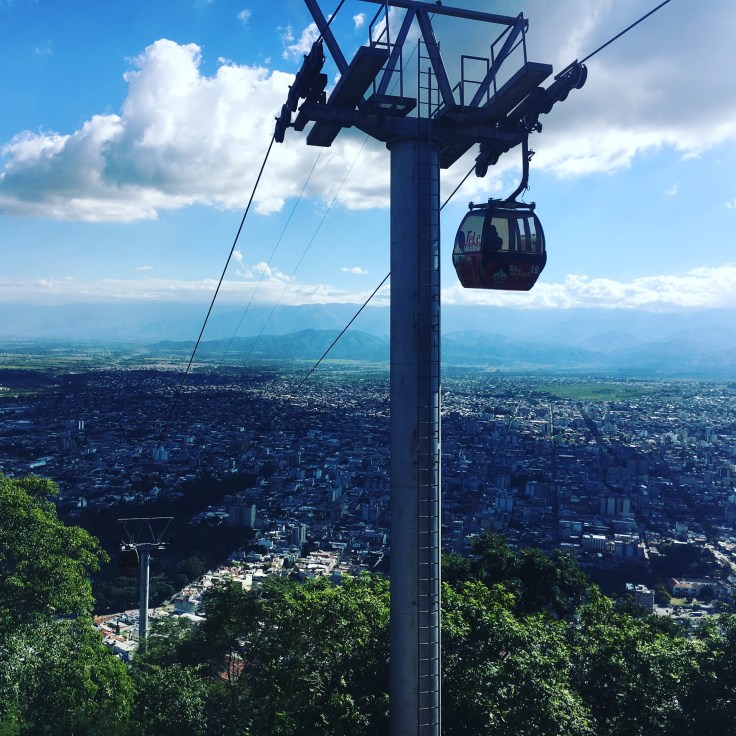
Cerro San Bernardo
For an outstanding view of Salta, take the teleférico (100 one way, 200 pesos round trip) from Parque San Martín to the top of this hill. If you’re looking for some workout, you can take the trail starting at the Güemes Monument and walk the stairs up.
Music
Salta is famous for its peñas, traditional folk music halls where locals come with guitars and take turns playing and singing. There is a saying in Salta: “if you lift a stone, you’ll find 3 singers underneath”.
The most famous peña is La Casona del Molino (Luis Burela 1), a five-minute taxi ride from the city center.
Restaurants
In Argentina, you need to eat meat, that’s for sure, but in Salta, you also need to eat empanadas as the city is home to the best ones in the country!
- Viejo Jack: steakhouse where I tasted INCREDIBLE meat! We ordered the wine of the house (not bad), a salad and 1.3 kg of meat for 3 (El Churrasco and Bife de Chorizo) for 900 pesos total. The waiter cut the meat with a spoon to divide it, so you can imagine when I say it melted in your mouth. I really recommend it, even though the service was not the friendliest.
Av. Bicentenario de la Batalla de Salta 145 - Patio de la Empanada: a rustical patio a bit further from the center, that regroups 6-7 small restaurants. You can try empanadas from the different ones and choose if you want them al horno (oven baked) or fritas (fried). I recommend the empanada de carne (meat) or de queso (cheese), and especially frita. The spicy tomato and ají pepper dipping sauce served on the side is also very good. The prices go from 8 to 15 pesos each.
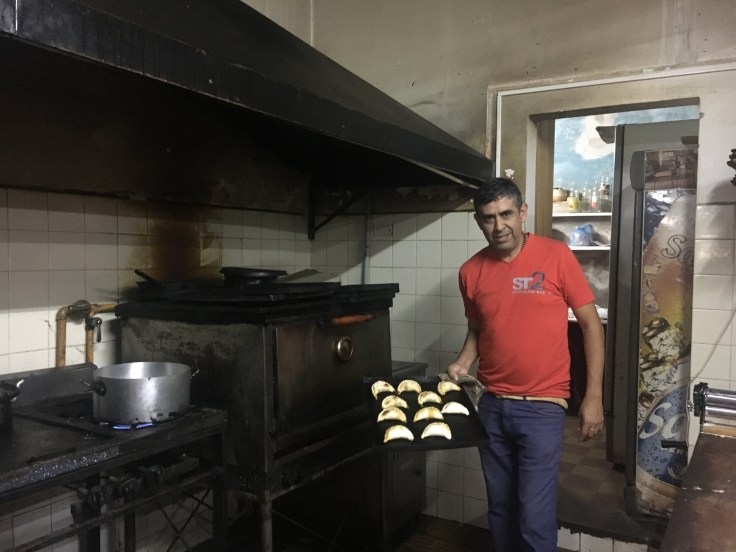
Av. San Martin esquina Esteco - Casa de Oro: you’ll have to look for it as it doesn’t have any sign, but the you’ll be very lucky if you find it as the empanadas are to die for! You can only choose between carne, pollo o queso (meat, chicken or cheese) and they are oven baked. I recommend the queso! It costs around 13 pesos each. And you should talk with Pablo, the cook, as he knows everything about Salta! He will explain the history, the different zones of the city and everything you want to know. This place was recommended to me by a few locals and haven’t seen any tourists there so, you’re choice to believe me or not on how good they are..
Gral. Martin Güemes 236
Mon-Sun 11am-3pm, 8pm-12:45am
I stayed at the Coloria Hostel, very well situated (Gral. Güemes 333). It has a pool (but haven’t had time to use it) and clean bathrooms. They also organize tours to Cafayate, Cachi or the North (Humahuaca, Purmamarca, etc.).
 Just meets World
Leave a comment